THE ARTIST
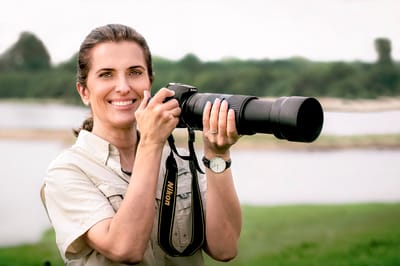
Her passion for wildlife began in childhood, inspired by her parents. Her mother, a Fine Art painter, writer, and conservationist, nurtured her artistic sensitivity, while her father’s travels throughout Africa and vivid safari stories awakened in her a profound connection with the wild. These early influences shaped her artistic vision and ignited a lifelong desire to explore, document, and protect wildlife.
In 2009, Monica published her first novel, The English Photographer, exploring the environmental impact of gold mining in Tanzania. Two years later, in 2011, she embarked on her first photographic safari to Africa, where she discovered a continent that would become the heart of her creative vision and conservation mission.
Through long-term observation and ethical field practices, Monica seeks to portray wildlife not as distant subjects, but as sentient beings with individuality, emotion, and enduring family bonds. Her photographs celebrate quiet moments, subtle interactions, and the emotional depth of the natural world, inviting viewers to reflect on humanity’s responsibility to protect it.
She has photographed extensively across Africa, including Zimbabwe, Kenya, Zambia, Tanzania, South Africa, and Botswana, with a particular focus on the Big Five, endangered species, and keystone animals whose survival is essential to the health of entire ecosystems. Her work has received international recognition for its emotional depth, artistic vision, and conservation-driven message.
Beyond creating images, Monica uses photography as a powerful tool for education, advocacy, and conservation. Through visual storytelling, she seeks to raise awareness about habitat loss, biodiversity conservation, and the urgent need to preserve Earth’s remaining wild places for future generations.
In 2014, she volunteered at the C.A.R.E. Wildlife Rehabilitation Centre & Sanctuary in South Africa’s Grietjie Nature Reserve, where she worked in the rehabilitation and release of chacma baboons. This hands-on experience strengthened her commitment to conservation and reinforced her belief that photography could become one of her most powerful tools for protecting wildlife.
Today, Monica continues to return to Africa, documenting its wildlife with a clear sense of purpose: to inspire wonder, foster empathy, and give a voice to the wild.
“Why wait until a species is on the brink of extinction before we try to help?”
— Rita Miljo (1931–2012), Founder of C.A.R.E. Wildlife Rehabilitation Centre & Sanctuary